Butterfly Life Cycle Activity
Watch the magic of metamorphosis unfold with this butterfly life cycle activity. Raise your own butterflies using a kit and learn about each stage of their life cycle. It's a fun and educational experience for the whole family.
Print
Pin
Ingredients
- Butterfly kit*
- Sugar To mix with a little water for the butterflies once they emerge. you can also feed them fresh fruit such as sliced oranges, watermelon, pears, etc…
- Q-tip
Instructions
- When the live caterpillars arrive, open them up and set them in a place that is free from harsh, direct sunlight or cold drafts. Also, if you have little hands around, I recommend keeping them in a place where they won’t be easily bumped or opened!
- Observe! If you have little observers, they will LOVE the observation journal that comes with the kit recommended above! It is full of activities to follow along with as you watch the caterpillars transform. During the first few days, the caterpillars will eat and make silky, stringy webs.
- Within a few days, the caterpillars will begin to hang from the lids and form their chrysalides. This is such a fascinating process to watch. They should not be bumped or disturbed while going through this transformation.
- Once all the caterpillars have formed a chrysalis, let them set up and “harden” for about 3 days. After this, it is safe to carefully remove the lid and set them up on their stands. Don’t worry if a chrysalis falls or has fallen during the process. It happens! When you transfer them to the habitat on day 3, you will carefully move the fallen chrysalis to the habitat. You can place it on a paper towel, if you’d like. Place it near the side of the habitat with netting so that when the butterfly emerges, it has something to climb up on as its wings dry and straighten.
- This is where your Q-tip comes in handy. After removing the lids and placing them in the little stands, gently brush away any webbing that may make it difficult for the butterfly to emerge from the chrysalis. This part is FUN! Sometimes, a chrysalis may “wiggle” as you brush away the webbing. The reason for this wiggle is an instinctive defense that they use to ward off predators in the wild. Some will wiggle more than others!
- Watch and wait! Typically, it takes about 5-7 days for a Painted Lady butterfly to emerge from its chrysalis. Observing the colors and transparency of the chrysalides will give you a clue as to when they may emerge! If the chrysalis is brownish and papery, it is likely near the beginning of the chrysalis phase. As they transform inside, the chrysalis becomes more and more transparent, and just before they emerge, you can see the patterns on their wrinkled up wings! Once you see this, watch closely because once it is time to emerge, the butterflies waste NO time! A single butterfly can emerge in as little as 10 seconds, so if you want to catch one coming out of the chrysalis, be patient and watch, otherwise, you may miss it!
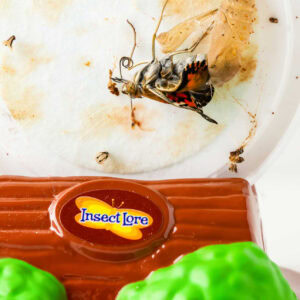
- After the butterflies emerge, they like to hang and dry their wings. It is a lot of fun to watch them climb and watch as their wings unfold. *Please note: Sometimes butterflies are messy when they emerge and dry. You may notice some red “liquid” that can be mistaken for blood as they hang and dry. This is called meconium, and is a natural part of the process. It is leftover waste from the transformation process. It cleans up easily with some hydrogen peroxide! Spray/pour hydrogen peroxide on the areas AFTER releasing the butterflies, and then rinse with water.
- After they emerge you can feed them the prepared sugar water on a sponge or give them small pieces of cut fruit on a paper plate. Make sure that they can get to the juices of the cut fruit! (If feeding orange slices, break them open to release the juices inside.)
- After observing your butterflies for a few hours (up to a day or two), it is time to release them and watch them fly! Some butterflies will fly away as soon as possible to find food, while others hang around on a finger or a nose. 😊 It is best to release them where there are plenty of flowers to drink from!
Notes
*Kit should include the following:
- Live caterpillars (some kits include vouchers to receive caterpillars at a later date… Make sure you read to know what your kit includes so that you are prepared!)
- Caterpillar food
- Stands
Tried this recipe?Please leave a comment below or pin it to your Pinterest account!